
Google Reviews vs Yelp: Which Platform Actually Wins for Local Businesses in 2026?
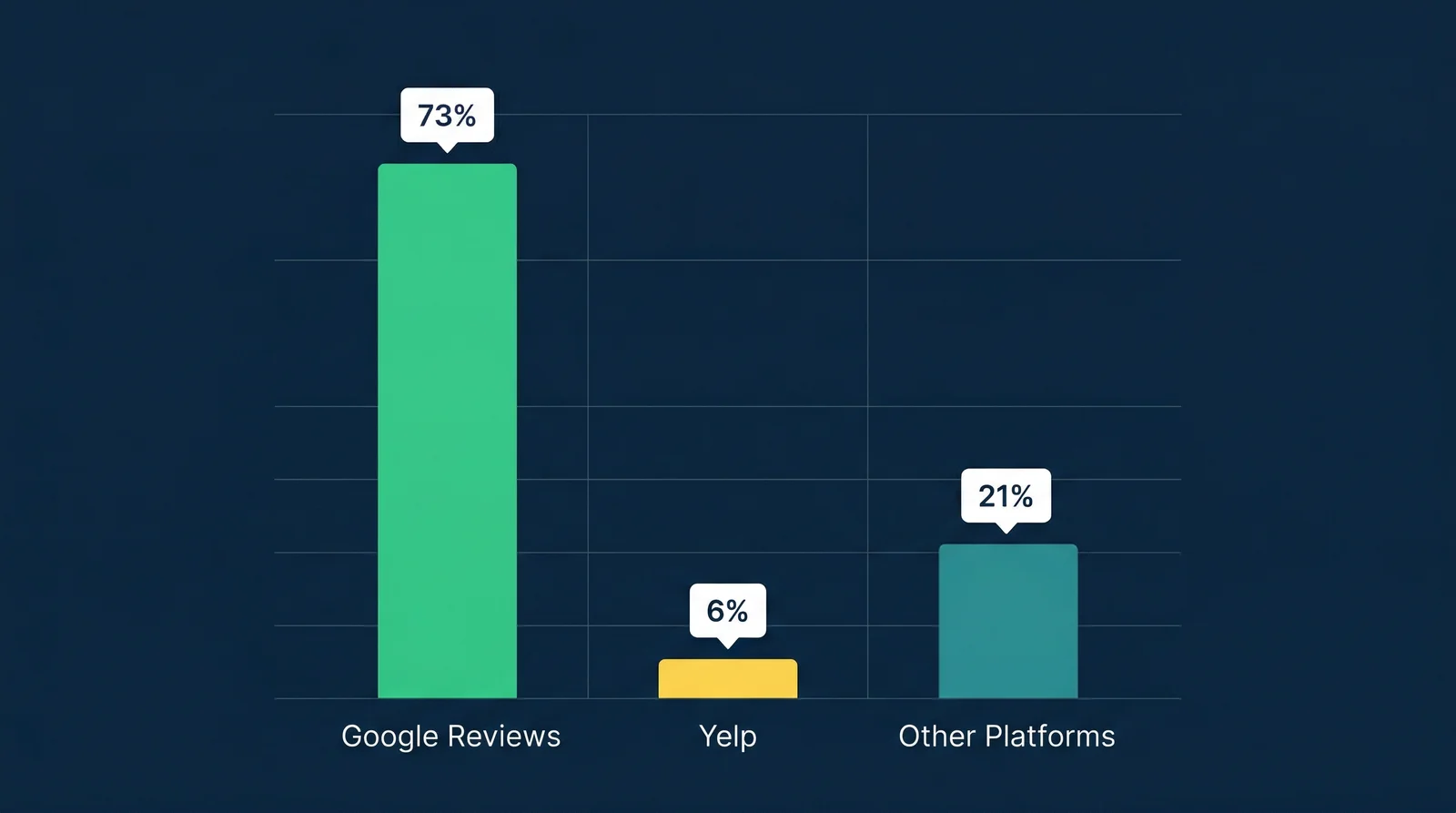
Google controls 73% of all online reviews. Yelp has 6%. For Indian businesses, the gap is even larger — because Indian consumers do not use Yelp at all. Here is the complete data-backed comparison.
Table of Contents
TL;DR — Key Takeaways
Google controls 73% of online reviews; Yelp has 6%
83% of consumers check Google reviews before visiting a local business. Only 44% check Yelp. The audience gap is not close.
Google reviews directly affect your Maps ranking; Yelp reviews do not
Every Google review contributes to your local pack position through relevance, prominence, and recency signals. Yelp reviews have zero effect on where you rank on Google Maps.
In India, Yelp has near-zero consumer presence
Indian consumers use Google Maps, Zomato, JustDial, and Sulekha. They do not use Yelp to find local businesses. A Yelp listing for an Indian business is effectively invisible.
Yelp filters out legitimate reviews from new users
A 2025 academic study confirmed that reviews from users with limited Yelp history are systematically filtered. Your best customers — those who create accounts just to review you — often lose their reviews.
The verdict is clear: invest 100% of your effort in Google
For Indian local businesses in 2026, Google is where your customers are, where search results happen, and where your ranking improvement lives.
Every month, thousands of business owners search for a comparison of Google Reviews and Yelp, trying to figure out where to direct their review-building effort. Most are already using Google Business Profile and collecting a handful of reviews, and they wonder whether they are missing something by not focusing on Yelp.
They are not missing anything. At least not for most markets — and certainly not for India.
I built MapLift specifically around Google's review ecosystem, which means I have had to understand precisely why Google wins this comparison — not just at a brand level, but through the actual mechanisms that connect reviews to business outcomes. Here is everything the data shows, with India-specific context included throughout.
Platform Overview: Google Reviews vs Yelp at a Glance
Before comparing specifics, it helps to understand what each platform actually is — and the fundamental asymmetry between them.
Google Reviews
Part of Google Business Profile — the free listing that appears when someone searches for your business or businesses like yours on Google Search and Google Maps.
- Reviews are publicly visible in Google Search and Maps results
- Directly indexed by Google and influence local search ranking
- Free to collect and manage
- Used by 83% of consumers before visiting a local business
Yelp
An independent review platform founded in 2004, built primarily for the North American market. Operates its own search and advertising business separately from Google.
- Reviews do not affect your Google Maps ranking
- Has an aggressive filter that removes legitimate reviews
- Virtually no consumer presence in India
- Advertising costs $150–$1,000+ per month with no organic benefit
The fundamental asymmetry:
Google owns the search. Your Google reviews live inside the system people use to find you. Yelp reviews live on a separate platform that most users visit only if they specifically navigate to Yelp. This single fact shapes every conclusion in this comparison.
Reach and Market Share: The Data Is Not Close
Market share data from 2025–2026 makes the scale of Google's dominance concrete.
73%
Google share of all online reviews globally
WiserReview, 2026
6%
Yelp's share of all online reviews globally
WiserReview, 2026
83%
of consumers check Google reviews before visiting
BrightLocal, 2025
| Metric | Yelp | |
|---|---|---|
| Share of all online reviews | 73% | 6% |
| Consumers who check before visiting | 83% | 44% |
| Consumer trust ranking | #1 (67% most trusted) | #3 (41% trust) |
| Mobile search market share | 89.57% | N/A (not a search engine) |
| India consumer adoption | Dominant — primary platform | Near-zero |
| Direct Google Maps ranking impact | Yes — volume, rating, keywords, recency | None |
| Review filter issues | Minimal — inclusive system | Significant — legitimate reviews removed |
| Cost to collect reviews | Free | Free (ads cost $150–$1,000+/mo) |
What this means practically:
For every 100 customers who check reviews before deciding to visit your business, roughly 83 check Google. Roughly 44 check Yelp. There is meaningful overlap, but the priority is clear. And in India, where Yelp has almost no consumer adoption, that 44% figure is far lower.
How Each Platform Affects Your Local Search Ranking
This is where the comparison becomes decisive — not just a matter of scale, but of fundamental mechanism.
Google Reviews and Your Maps Ranking
Google's local ranking algorithm evaluates three factors: Relevance, Distance, and Prominence. Your Google reviews contribute directly to all three:
- Review volume: More reviews signal legitimacy and prominence to Google.
- Review rating: Businesses below 3.9 stars rarely appear in the local pack.
- Review recency: Fresh reviews signal an active, relevant business. 73% of customers only care about reviews from the past month.
- Review keywords: When customers mention your services and location, Google reads that text and connects your listing to those searches.
Yelp Reviews and Your Search Ranking
Yelp reviews have zero direct effect on your Google Maps ranking.
Google does not use third-party review platforms to determine your local pack position. Your 200 Yelp reviews provide no ranking benefit in Google Maps results.
Yelp has its own internal algorithm, so strong Yelp reviews can help you rank inside Yelp's search. But Yelp's search is used by a small fraction of the audience using Google's search — and in India, virtually none.
Real result: Bengaluru salon case study
A salon in Koramangala, Bengaluru used MapLift to collect 46 Google reviews over four months. The review templates guided customers to mention specific services — "keratin treatment in Koramangala," "hair colour near HSR Layout" — alongside their experience.
Result: Moved from position 6 to position 2 in the Google Maps local pack for their primary service keywords within that window.
The salon had zero Yelp reviews throughout this period. Zero Yelp reviews were needed. Their customers were finding them through Google Maps.
For the full breakdown of how Google reviews affect your ranking, read our Google Maps ranking factors guide.
The Yelp Review Filter Problem: Why Legitimate Reviews Disappear
This is the aspect of Yelp most comparison articles gloss over — and the one that frustrates business owners most once they discover it.
Yelp operates an automated review filter that removes reviews it deems untrustworthy. In principle, this protects the platform from fake reviews. In practice, it systematically removes legitimate reviews from customers whose Yelp activity is limited.
What the research found:
A 2025 academic study audited 707,000 recommended reviews and 178,000 not-recommended reviews across 15,000 Yelp business profiles. The finding: reviews from less-established users — people with fewer Yelp friends, fewer prior reviews, and less platform history — are disproportionately filtered out.
In 2025 alone, Yelp's automated systems identified and filtered nearly half a million reviews for exhibiting characteristics of AI-generated content — sweeping up legitimate reviews from real users in the process.
New accounts filtered immediately
A customer who creates a Yelp account specifically to leave you a review is likely to have that review filtered. Yelp sees a new account with no history and removes it from the recommended section.
You cannot appeal or recover filtered reviews
Yelp provides no mechanism to appeal filtered reviews. A review removed to the "not recommended" section stays there, invisible to most users, with no recourse for the business owner.
Opaque and inconsistent criteria
Yelp does not disclose exactly why specific reviews are filtered. The same company that filters your reviews also sells you advertising — a conflict that has been widely noted by business owners.
AI content sweep caught real reviews
In 2025, Yelp filtered nearly 500,000 reviews for suspected AI-generation. Reviews from legitimate customers writing naturally were caught in this automated sweep.
By contrast, Google's review system:
Reviews from users with limited Google review history still post and remain visible. The barrier to having your legitimate reviews count is dramatically lower. When a satisfied customer leaves you a Google review after visiting your business, it stays.
Yelp in India: Why It Barely Exists Here
For Indian local businesses, the Yelp question is even simpler than the global comparison suggests.
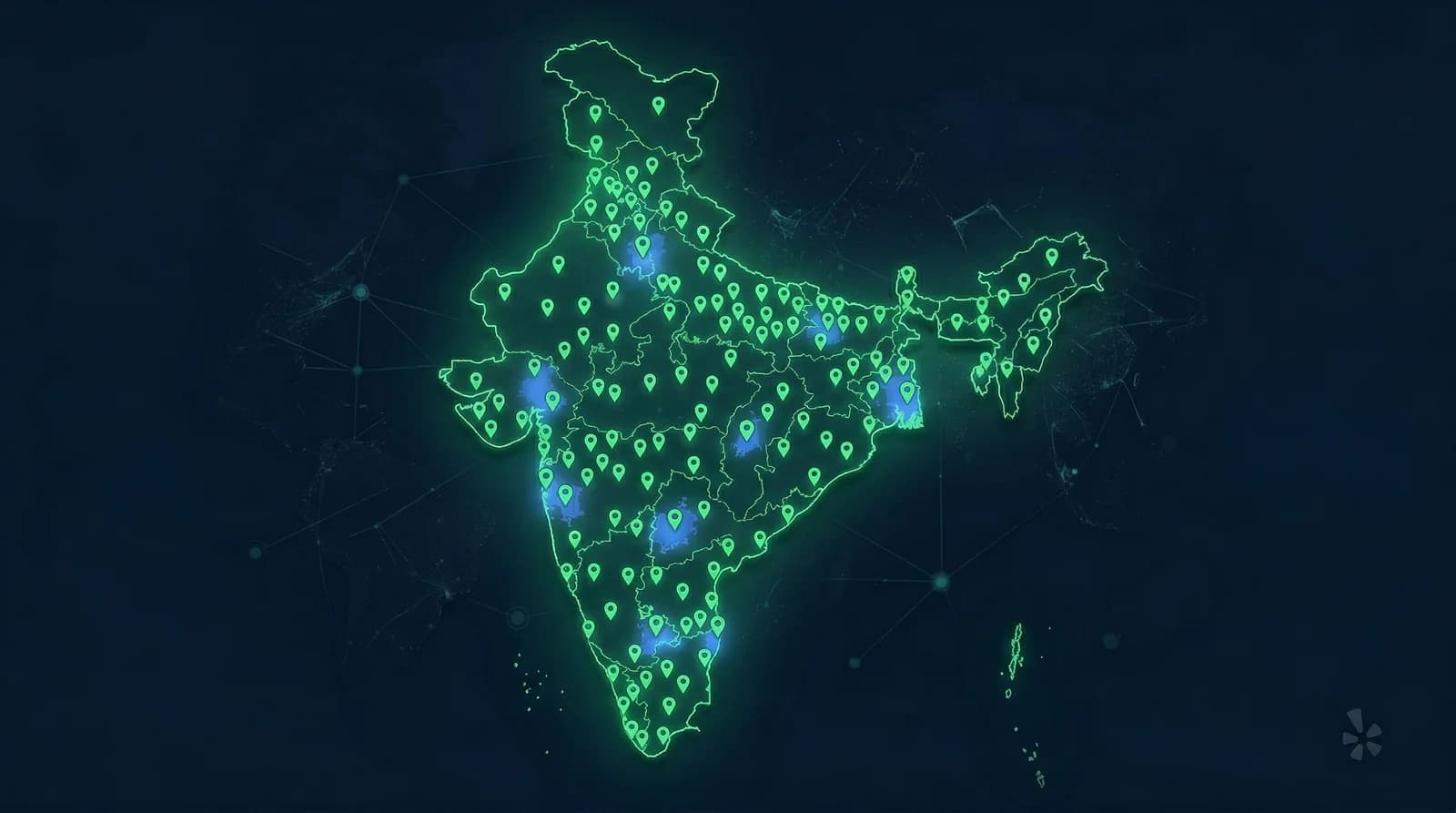
Yelp has virtually no consumer presence in India.
Yelp was built for the North American market and has never meaningfully expanded into India. Indian consumers looking for restaurants, salons, clinics, or service providers open Google Maps, Zomato, JustDial, and Sulekha. They do not open Yelp.
Some business listing articles in India include Yelp on their "top sites to list your business" lists because Yelp has high domain authority (DA 93) as a global domain. But domain authority and actual consumer usage are very different things. A Yelp listing may marginally help your off-page SEO, but Indian consumers are not opening Yelp to find your business.
Where Indian Consumers Actually Look
| Platform | Primary Use | India Relevance | Affects Google Ranking? |
|---|---|---|---|
| Google Business Profile | All local searches | Critical | Yes — direct signal |
| Zomato | Restaurants and food | High | Indirect (citation) |
| JustDial | Service businesses | High | Indirect (citation) |
| Sulekha | Home services | Medium | Indirect (citation) |
| MagicPin | Lifestyle and F&B | Medium | Indirect (citation) |
| Yelp | Not widely used in India | Minimal | None |
The energy you would spend managing a Yelp profile that Indian consumers will not read is better invested in your Google Business Profile optimization, your Google review collection strategy, and your presence on India-specific platforms like JustDial and Zomato.
Pricing and Advertising: What You Actually Pay
Both platforms offer free listings and paid advertising. The economics are fundamentally different.
Google Business Profile
- Creating and maintaining a Google Business Profile is completely free
- Collecting and responding to Google reviews costs nothing
- Organic local pack placement is earned through reviews and optimization — not bought
- Every review you collect builds a permanent ranking asset that compounds over time
Yelp for Business
- Basic business listing is free
- Yelp advertising: $150–$1,000+ per month (priced for Western markets)
- Visibility requires ongoing ad spend — when you stop paying, exposure drops
- For Indian businesses: Indian consumers are not on Yelp, so ad spend reaches near-zero relevant audience
The ROI framing that matters:
Google's organic traffic is free. If you build a strong Google review profile through systematic collection, you improve your Maps ranking without ongoing advertising spend. The investment is effort and process, not media budget.
Yelp advertising requires ongoing spend to maintain visibility. When you stop paying, your visibility diminishes. You are renting visibility rather than building an asset. For most Indian businesses operating on modest marketing budgets, this distinction is decisive.
The Verdict: Where Indian Businesses Should Focus Their Effort
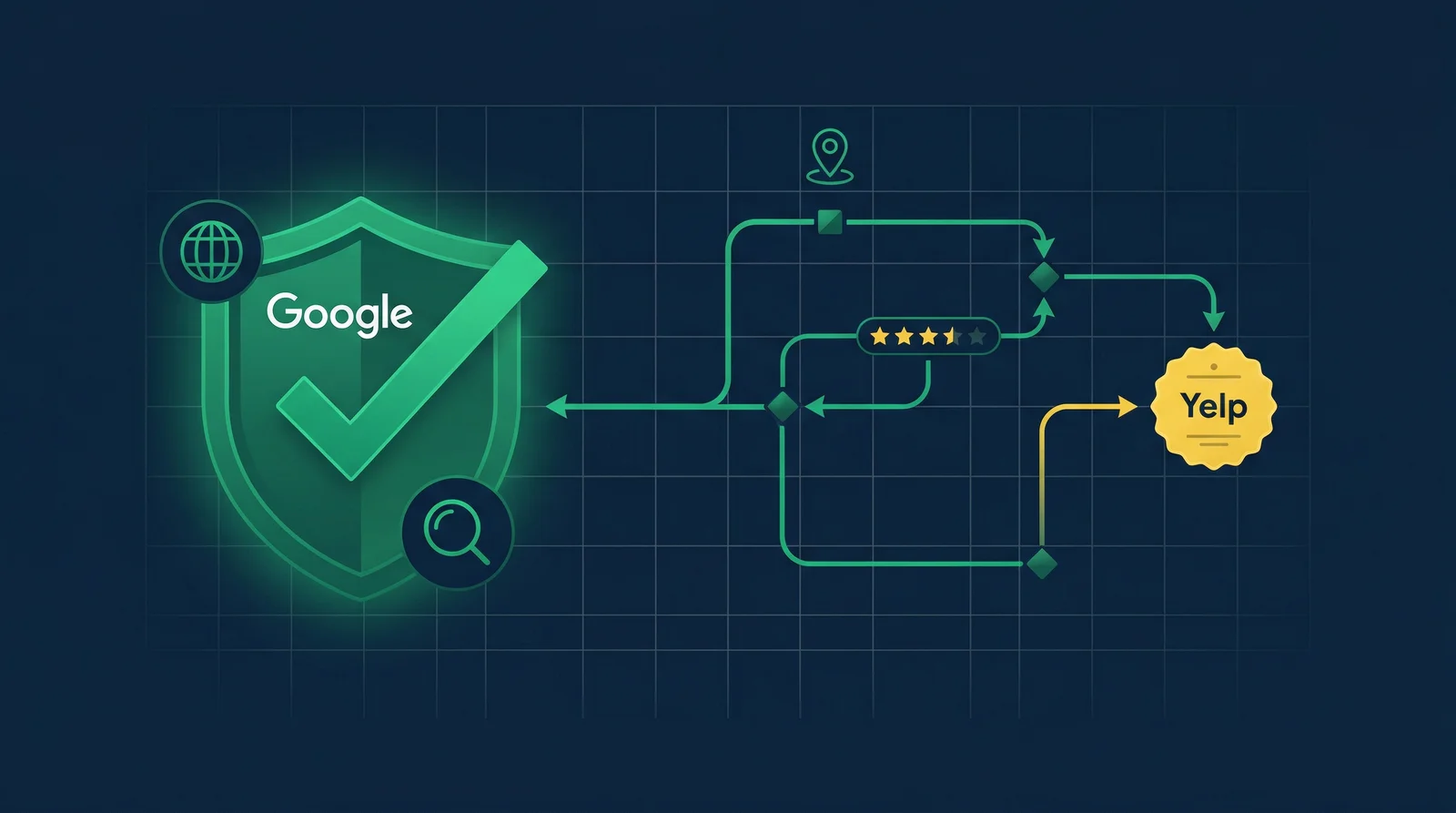
Google Reviews wins on every dimension that matters for Indian businesses
When a basic Yelp listing is still worth maintaining:
The 4-step Google review action plan for Indian businesses:
Build a systematic Google review collection process
Make it easy for customers to leave reviews — QR codes at checkout, direct review links via WhatsApp, follow-up messages after service. Consistency matters more than volume spikes.
Optimize your Google Business Profile completely
Categories, photos, services, Q&A, posts. Most businesses use less than 40% of what GBP offers. A complete profile ranks 7x more often than an incomplete one.
Ensure your reviews contain service and location keywords
Generic reviews help your rating but contribute nothing to local search relevance. Guide customers to mention what they used or ordered and where they are located. This is the highest-leverage review improvement available.
Manage your India-specific platforms alongside Google
JustDial and Zomato (for food) reach Indian consumers who start their searches there. These are the Yelp equivalents in the Indian market — with actual Indian users behind them.
For a complete guide to the platforms that should sit alongside Google in your Indian business review strategy, see our review management software guide and our comparison of review software tools for 2026.
Related Guides
Frequently Asked Questions
Does Yelp affect my Google Maps ranking?
No. Yelp reviews have zero direct effect on your Google Maps ranking. Google's local algorithm evaluates signals from within Google's own ecosystem — your Google Business Profile, Google reviews, and website signals. Third-party review platforms like Yelp are not part of this algorithm.
This is confirmed by Google's own documentation on local ranking factors, which focuses entirely on Google Business Profile signals, review signals within Google, and website authority.
Is Yelp available in India?
Yelp technically operates globally and can be accessed in India, and a Yelp business listing does exist as a category on Indian business directory lists. However, Yelp has virtually no consumer adoption in India.
Indian consumers use Google Maps, Zomato, JustDial, and Sulekha to find local businesses. They do not use Yelp. A Yelp listing for an Indian business may provide a marginal off-page SEO benefit (Yelp has DA 93 as a domain), but it will not drive meaningful customer discovery.
Which has more reviews: Google or Yelp?
Google holds approximately 73% of all online reviews globally, compared to Yelp's roughly 6% share — making Google's review volume approximately 12x larger than Yelp's.
Google's dominance is even more pronounced in non-Western markets like India, where Yelp has minimal consumer presence. The vast majority of reviews an Indian business will ever receive will be on Google.
Why does Yelp keep removing or filtering my reviews?
Yelp's automated filter system removes reviews from users it deems untrustworthy — typically users with limited Yelp activity (few friends, few prior reviews, new accounts). A 2025 academic study confirmed that reviews from less-established users are disproportionately filtered.
If a customer creates a Yelp account specifically to review your business, their review is likely to be removed to the "not recommended" section, invisible to most users. Yelp provides no appeal mechanism. This is a systemic problem, not an edge case — it affects a significant portion of reviews businesses receive, particularly from satisfied first-time customers.
Should Indian restaurants be on Yelp?
Indian restaurants should prioritize Google Business Profile and Zomato, which are the platforms Indian consumers actually use when choosing where to eat. A basic Yelp listing does no harm, but it is not where your review-building effort should go.
Zomato ratings and Google Maps ratings are what matter for Indian restaurant discovery. A restaurant with 200 Google reviews and 500 Zomato reviews will attract far more customers than a restaurant with the same on Yelp.
How many Google reviews does my business need to rank well in India?
There is no universal minimum. In lower-competition markets, 15–25 reviews may be enough to appear in the local pack. In competitive urban Indian markets — a restaurant in Mumbai, a salon in Bengaluru, a clinic in Delhi — the local pack typically contains businesses with 80–400+ reviews.
More important than total count: review recency (are you collecting consistently?) and review content (do they mention your specific services and neighborhood?). A business with 40 recent, keyword-rich reviews often outranks a competitor with 150 old, generic reviews. Read our Google Maps ranking factors guide for the full picture.
Can I use MapLift to improve my Google review quality?
Yes. MapLift generates AI-powered review templates based on your actual business data — your categories, services, and location. The templates guide customers to naturally write keyword-rich reviews that mention what they experienced and where your business is located.
This matters because 73% of reviews contain zero keywords that help a business rank for relevant searches. A review that says "great service" helps your rating. A review that says "best physiotherapy for back pain in Koramangala" improves your relevance for back pain and physiotherapy searches in Koramangala.
Stop Splitting Your Effort. Double Down on Google.
The question "Google Reviews vs Yelp — which is better for local businesses?" has a clear answer in 2026: Google, by a wide margin. For Indian businesses specifically, it is not a close comparison at all.
Your customers are on Google Maps. Their decision to visit your business or your competitor's is shaped by what they see on Google. Building your Google review profile is building a permanent asset — higher ranking, more visibility, more customers — without ongoing advertising spend.
The next question is not whether to focus on Google. It is how to collect reviews that actually improve your ranking. Generic reviews ("great place, will visit again") help your rating but contribute nothing to your local search relevance. The keywords in review text are what connect your listing to specific searches — and most businesses leave this entirely to chance.
MapLift generates AI-powered review templates in 15 seconds
Based on your actual business data — categories, services, location — the template guides customers to naturally write keyword-rich reviews that boost your Google Maps position.
Plans start at Free (Rs.0) through Essentials (Rs.299/mo), Pro (Rs.799/mo), and Business (Rs.1,499/mo).
Sources & References
- Local Consumer Review Survey 2025- BrightLocal
- 22 Yelp Statistics & Trends (2026)- WiserReview
- Yelp 2025 Trust & Safety Report- Yelp via MarTechCube
- Understanding the Yelp Review Filter (Academic Study)- ResearchGate / ICWSM
- Improve your local ranking on Google- Google
- Google Ads vs Yelp Ads (2025)- AgencyAnalytics
- 31 Local SEO Statistics You Need for 2025- BrightLocal
Keep reading
Ready to act on this? What MapLift does — every feature, and which plan carries it.