
Ask Maps & Gemini Optimization: How to Get Your Business Recommended by AI
Google just changed how customers find local businesses. Ask Maps uses Gemini to answer conversational queries like "best quiet cafe for working near me" — and it reads your review text to decide who to recommend. Here is how to be in those results.

TL;DR — Key Takeaways
Ask Maps launched March 12, 2026 — India and US first
Google's new Gemini-powered conversational AI replaces the old Q&A tab and answers natural-language local queries ("best North Indian lunch near office") with curated business recommendations
Gemini reads review text for semantic proof — not just star ratings
A review saying "the dal makhani here is the best in Koregaon Park" teaches Gemini exactly what your business is known for. A review saying "great service" teaches it nothing
Your Google Business Profile is Gemini's primary training data
Complete profiles with detailed attributes, services, and Q&A give the AI more signals to match your business to specific queries
Multi-platform presence amplifies Ask Maps visibility
US testing shows Gemini pulls from 14+ external sources — Zomato, JustDial, Facebook, MagicPin — making your presence across Indian directories more important than ever
40.16% of local queries now trigger AI-generated answers
The shift from keyword search to conversational discovery is accelerating. Businesses that optimize now capture the first-mover advantage while competitors are still unaware
On March 12, 2026, Google quietly changed how customers discover local businesses.
Ask Maps — powered by Gemini — replaced the old Maps Q&A tab and introduced something new: conversational local search. Instead of typing "biryani Indiranagar," your customers now ask "where can I get the best biryani for a family dinner near Indiranagar with parking?" Gemini answers with a curated list of businesses it considers most relevant to that specific question.
The businesses Gemini recommends are not necessarily the ones with the most reviews, the highest star ratings, or even the most complete profiles. They are the businesses whose digital footprint contains the richest semantic signals — specific service mentions, atmosphere descriptions, and contextual keywords that match the AI's understanding of what a user actually wants.
This guide explains exactly how Ask Maps works, what signals Gemini reads, and the six-step optimization plan that positions your Indian business to appear in these AI-generated recommendations — before your competitors have even noticed the change.
What Is Google Ask Maps?
Ask Maps is a conversational AI discovery feature built into Google Maps, powered by Google's Gemini model. It launched on March 12, 2026, rolling out first in the United States and India on Android and iOS, with desktop access announced as coming soon.
How Ask Maps Replaced the Old Q&A Tab
Google Maps previously had a Q&A section on each business profile where users could submit questions and business owners or other users could answer them. That tab has been replaced by Ask Maps — a fundamentally different experience.
Instead of asking about a specific business, users can now ask open-ended discovery questions about an area or a need. Gemini processes the query, evaluates its data across 300 million places, and returns a curated list of businesses with AI-written narrative summaries explaining why each is relevant.
The shift matters because it changes the unit of competition. Your business is no longer just competing against the business next door for a search term — it is competing for relevance in an AI conversation.
What a Real Ask Maps Query Looks Like
User asks:
"Best place for a quiet working lunch with fast wifi near Koramangala"
Gemini looks for: quiet ambience reviews, wifi attribute, location mentions, lunch menu
User asks:
"Family salon that does bridal packages and has parking in Baner Pune"
Gemini looks for: bridal package service listing, parking attribute, family-friendly reviews
User asks:
"Good physiotherapist near me who has experience with sports injuries and early morning slots"
Gemini looks for: sports injury reviews, hours/availability, experience attributes
Scale: 300 million places, 500 million contributors
Ask Maps draws on data from over 300 million places and reviews submitted by 500 million contributors. It personalizes results based on your previous Maps activity, saved places, and location-relevant search history. This means two users asking the same question may see different business recommendations — and a business with strong, specific review content is more likely to appear across both.
How Gemini Decides Which Businesses to Recommend
Understanding how Gemini evaluates businesses for Ask Maps is the foundation of everything else in this guide. The model does not simply count your stars or check how many reviews you have. It reads.
Semantic Review Analysis — Gemini Reads Your Review Text
This is the most important shift introduced by Ask Maps. When a user asks "Which gym nearby is the least crowded on Monday mornings?" Gemini does not look for a gym with five stars. It scans every available review for phrases like "quiet," "never a wait for machines," or "peaceful atmosphere." The businesses whose review corpus contains that evidence get recommended. The ones that only have "great gym, love it" reviews do not.
Low-value review (teaches Gemini nothing)
"Super food, nice place. Would visit again."
Signals: none. Gemini cannot use this to match any specific query.
High-value review (semantic proof)
"The dal makhani here is the best in Koregaon Park — rich, buttery, and they have a quiet corner table perfect for business lunches."
Signals: dish name, neighborhood, atmosphere, use case. Matches 4+ query types.
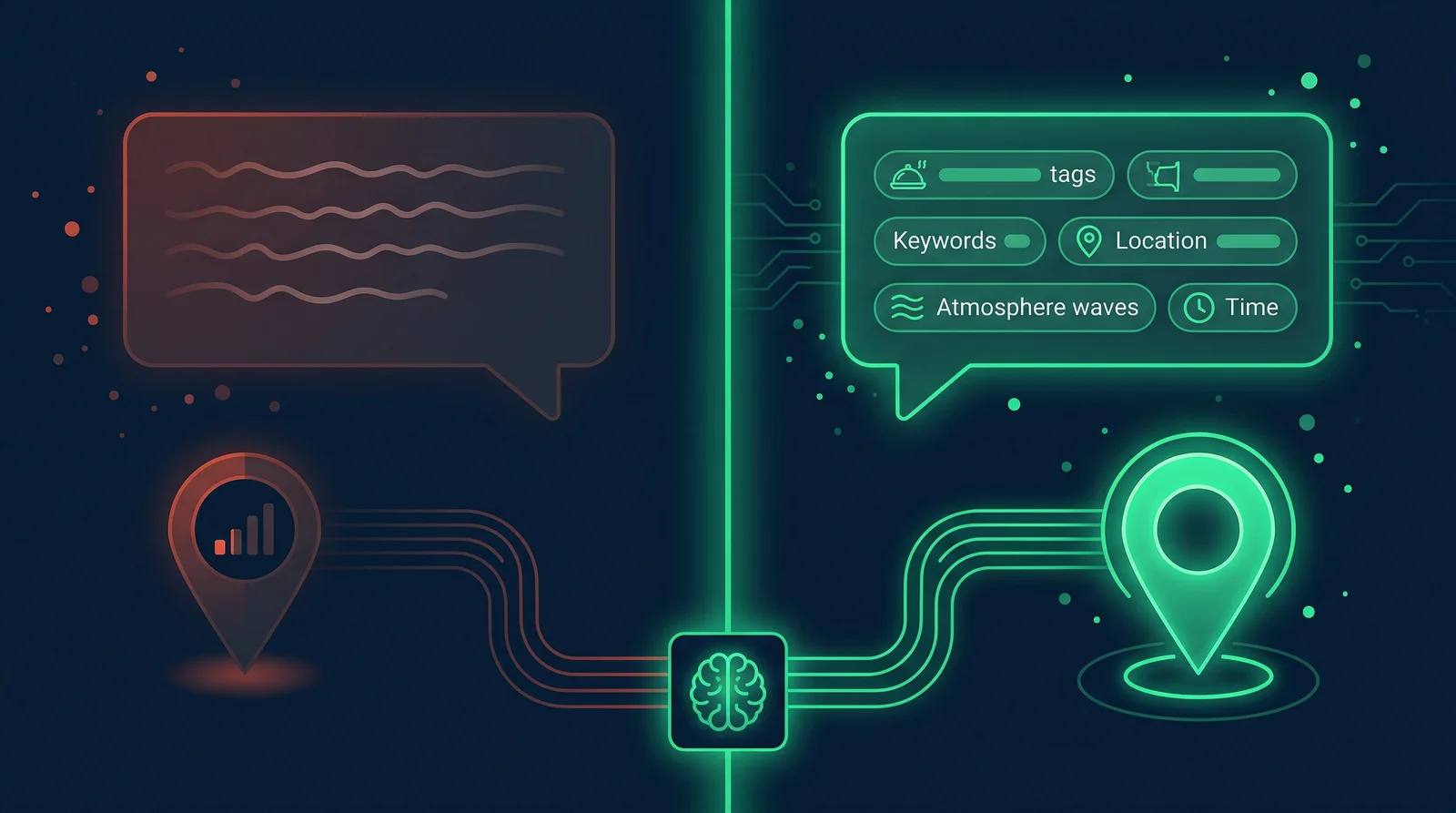
A review mentioning "great vegan options" contributes to visibility for every future Ask Maps query about vegan food near your area. A review noting "the outdoor patio is beautiful and quiet" makes you a candidate for recommendations about outdoor seating, quiet spots, or romantic dining. Each descriptive review is a new signal layer the AI actively reads and quotes.
Your Google Business Profile Is Gemini's Primary Training Data
Ask Maps does not only read reviews. It ingests your entire GBP — every attribute, every service listed, every product description, your business description, your category, and your Q&A section. Google has confirmed that businesses with complete, accurate profiles are 2.7 times more likely to be considered trustworthy by its AI systems.
The attributes section is particularly important. An attribute like "outdoor seating: yes" or "parking: free on-site" becomes findable evidence when a user asks a conversational question that includes those requirements. Most businesses leave dozens of applicable attributes unchecked.
GBP data Gemini actively reads for Ask Maps recommendations:
Multi-Platform Signals — Why Zomato and JustDial Now Matter More
Testing of Google's AI Mode in the US has shown the system pulling data from 14 or more external sources when building a business recommendation. These sources include Yelp, Facebook, industry directories, and local review platforms. For Indian businesses, the equivalent signal sources are platforms your customers already use daily.
A business with strong, consistent reviews across Google, Zomato, JustDial, MagicPin, and Facebook gives Gemini more corroborating evidence to justify recommending it. A business that only exists on Google is working with one data source — and Ask Maps prefers businesses with richer, corroborated profiles.
| Platform | Business Type | Ask Maps Relevance |
|---|---|---|
| Google Business Profile | All businesses | High |
| Zomato | Restaurants & cafes | High |
| JustDial | Services & retail | High |
| Facebook Business | All businesses | High |
| MagicPin | Local lifestyle | High |
| Practo | Clinics & healthcare | High |
| Sulekha | Home services | Medium |
| IndiaMART | B2B & products | Medium |
Why Indian Businesses Are at Risk Right Now
Ask Maps launched in India on the same day as the US. The opportunity is real and immediate. But three common patterns among Indian businesses create significant blind spots in the data Gemini relies on.
The Generic Review Problem
Research across MapLift-analyzed businesses consistently shows that 73% of Google reviews contain zero keywords that would help a business rank — or in the context of Ask Maps, that would give Gemini anything useful to cite. Indian reviews disproportionately fall into short, positive but vague patterns: "nice place," "friendly staff," "will visit again."
These reviews help your star rating but they do not teach the AI anything about what makes your business specific. When a user asks Ask Maps about a family restaurant with good vegetarian options near a particular neighborhood, Gemini needs reviews that explicitly mention family-friendly seating, vegetarian dishes by name, and the neighborhood. Generic reviews provide none of that.
The fix is not asking customers to write SEO reviews — that is both inauthentic and against Google's guidelines. The fix is providing review templates that prompt customers to describe their actual experience in specific terms. This is what MapLift's AI review templates are built to do.
Incomplete GBP Profiles — Gemini's Blind Spots
Most Indian businesses complete the required GBP fields — name, address, phone, category — and stop there. But the attributes, services, business description, and Q&A sections are where Gemini finds the specific evidence it needs for conversational queries.
A restaurant that has not checked "outdoor seating: yes" or listed its signature dishes in the menu section is invisible to Ask Maps queries about outdoor dining or specific cuisines. A salon that has not listed its specific services (bridal packages, hair color treatments, nail art) cannot be recommended for queries asking about those services.
Understanding Google Maps ranking factors has always required complete profiles. Ask Maps raises the stakes because an incomplete profile now means invisibility in AI-generated recommendations, not just lower traditional rankings.
40.16% of local queries now trigger AI-generated answers
Research from local search tracking firms shows that well over a third of all local search queries now generate an AI Overview or AI-curated result rather than a traditional list of blue links or Maps pins. This percentage is accelerating. Businesses that are not in the AI answer are simply not being seen for those queries — regardless of their traditional Maps ranking.
How to Optimize for Ask Maps — 6-Step Action Plan
These six steps address every signal layer Gemini evaluates when deciding which businesses to recommend. You can execute steps 1–3 this week. Steps 4–6 require consistency over 60–90 days.
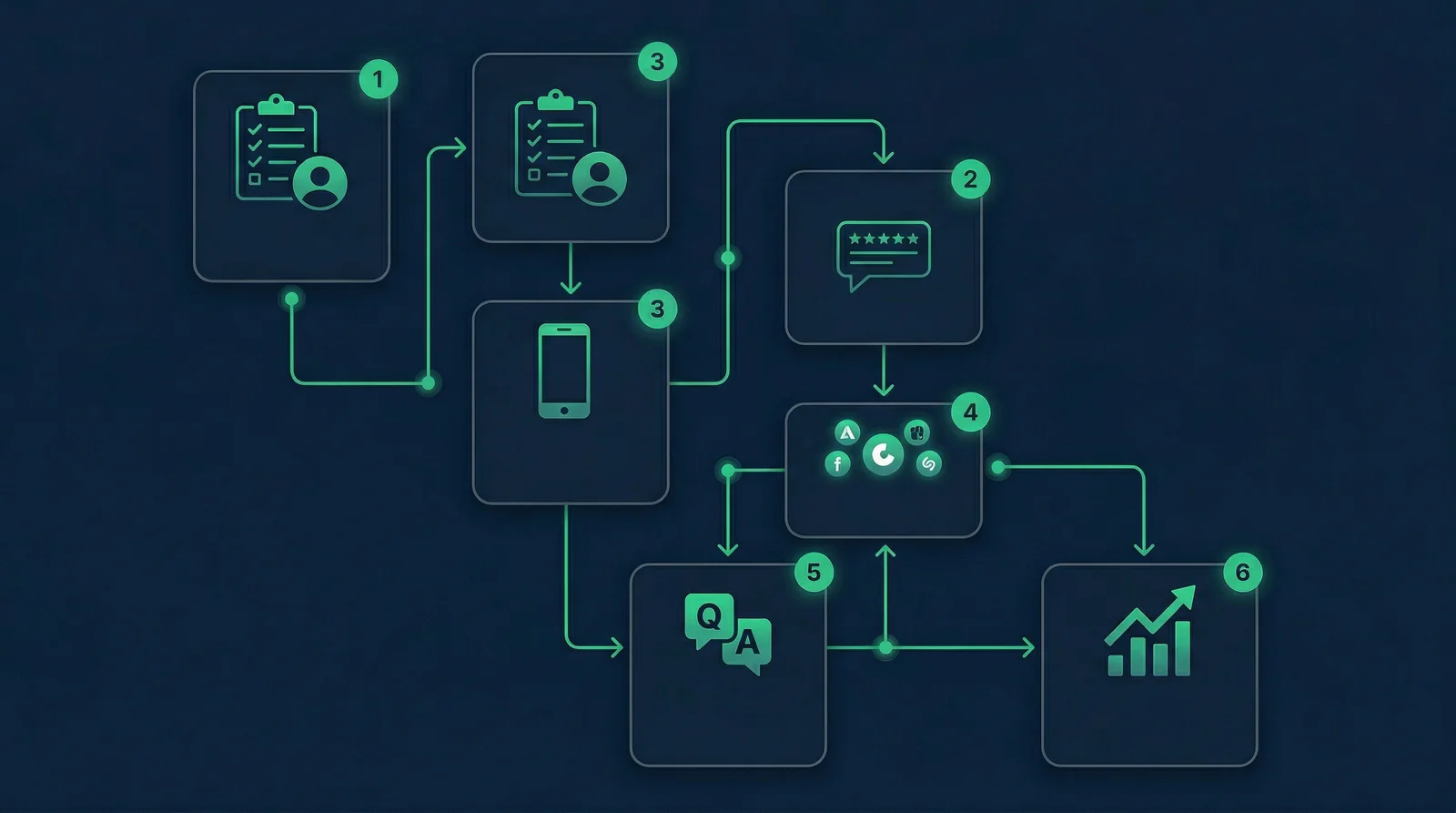
1Complete Every GBP Attribute — All of Them
Time: 45–60 minutes, one-time setup
Complete Every GBP Attribute — All of Them
Time: 45–60 minutes, one-time setup
Go into your Google Business Profile and open the Attributes section. Check every attribute that honestly applies to your business. Parking, outdoor seating, wifi, wheelchair access, women-led, vegetarian options, delivery, in-store shopping — each checked attribute is a direct signal Gemini can cite when answering a user query that includes that requirement. Most businesses leave 60–70% of applicable attributes unchecked.
- Add or update your business description (750 characters) — use natural language describing what you offer, who you serve, and what makes you different
- Complete your services section with individual service descriptions, not just service names
- Upload or update your menu/product catalog with item descriptions if you are a food business
- Set accurate hours including holiday hours — Gemini penalizes stale or inaccurate data
2Audit Your Existing Reviews for Semantic Signals
Time: 30 minutes
Audit Your Existing Reviews for Semantic Signals
Time: 30 minutes
Read through your last 30 reviews and identify which ones contain specific service names, dish names, neighborhood mentions, atmosphere descriptions, or use-case context. These are your semantic assets. Count them. If fewer than 30% of your reviews contain any specific language, you have a significant gap that Ask Maps will expose.
- Note which specific attributes your reviews most commonly mention
- Identify what your customers never mention (probably what you most want to rank for)
- Use this audit to inform what your review templates should prompt customers to write about
3Deploy Keyword-Specific Review Request Templates
Time: 15 minutes to generate, ongoing to deploy
Deploy Keyword-Specific Review Request Templates
Time: 15 minutes to generate, ongoing to deploy
A review template is a short message you share with customers after their visit — by WhatsApp, SMS, or printed QR code — that prompts them to write about their specific experience. A well-designed template for a Pune restaurant might say: "Tell them what you ordered, how the food was, and which part of the restaurant you liked." That prompt naturally produces reviews containing dish names, quality descriptors, and atmosphere detail — exactly what Gemini needs.
- Generate templates tailored to your specific business type and services
- Create separate templates for different customer experiences (first visit vs. regular)
- Use WhatsApp message templates for post-visit follow-up — conversion rates are high
- Print QR codes that link to your Google review page with the template pre-loaded
4Publish GBP Posts Using Natural-Language Phrases
Time: 15 minutes per post, twice per month minimum
Publish GBP Posts Using Natural-Language Phrases
Time: 15 minutes per post, twice per month minimum
GBP posts are indexed content that feeds into your local search presence. Write them the way a customer might ask Ask Maps about you. Instead of "Introducing our new weekend brunch menu," write "Our Sunday brunch in Indiranagar now includes a full South Indian spread with filter coffee — perfect for slow weekend mornings with family." That post trains Gemini on who you are and what specific experience you offer.
- Post at least twice per month — this signals active business management
- Include specific service names and neighborhood context in every post
- Use your posts to address seasonal queries ("pre-wedding bridal packages now available")
- Respond to every review within 48 hours — owner responses are part of the semantic data layer
5Seed Your Q&A Section With Conversational Questions
Time: 30 minutes, one-time setup
Seed Your Q&A Section With Conversational Questions
Time: 30 minutes, one-time setup
Since Ask Maps replaced the old Q&A tab, the Q&A content that previously existed is now part of the data pool Gemini draws from. You can ask questions on your own listing — and answer them yourself. Seed your Q&A with the questions your customers most commonly ask, phrased in the same natural language they would use with Ask Maps.
- Add 8–10 questions covering your most common customer inquiries
- Phrase questions conversationally: "Do you have parking for customers?" not "Parking available?"
- Answer each question specifically and completely — Gemini reads these answers
- Include your key service attributes in answers where relevant
6Build and Maintain Multi-Platform Review Presence
Time: 1–2 hours initial setup, 15 min/month maintenance
Build and Maintain Multi-Platform Review Presence
Time: 1–2 hours initial setup, 15 min/month maintenance
Ask Maps aggregates signals from multiple platforms. A restaurant with strong reviews only on Google is working with one data source. A restaurant with consistent, positive reviews across Google, Zomato, MagicPin, and Facebook gives Gemini corroborating evidence from multiple independent sources — which increases its confidence in recommending that business. For healthcare businesses, Practo reviews are especially valuable. For services, JustDial and Sulekha matter.
- Claim and complete your profiles on Zomato, JustDial, MagicPin, Facebook, and any industry-specific platform
- Ensure your NAP (Name, Address, Phone) is identical across every platform
- Set up review request flows for each platform where your customers are most active
- Respond to reviews on all platforms — not just Google
MapLift automates steps 2 and 3 in 15 seconds
Enter your business details and MapLift generates AI-powered review templates personalized to your services, location, and customer type. Templates prompt reviewers to mention specific dishes, service experiences, and neighborhood context — exactly the semantic signals Gemini looks for. Free plan available, no credit card required.
Ask Maps vs. Traditional Maps Ranking — What Changed
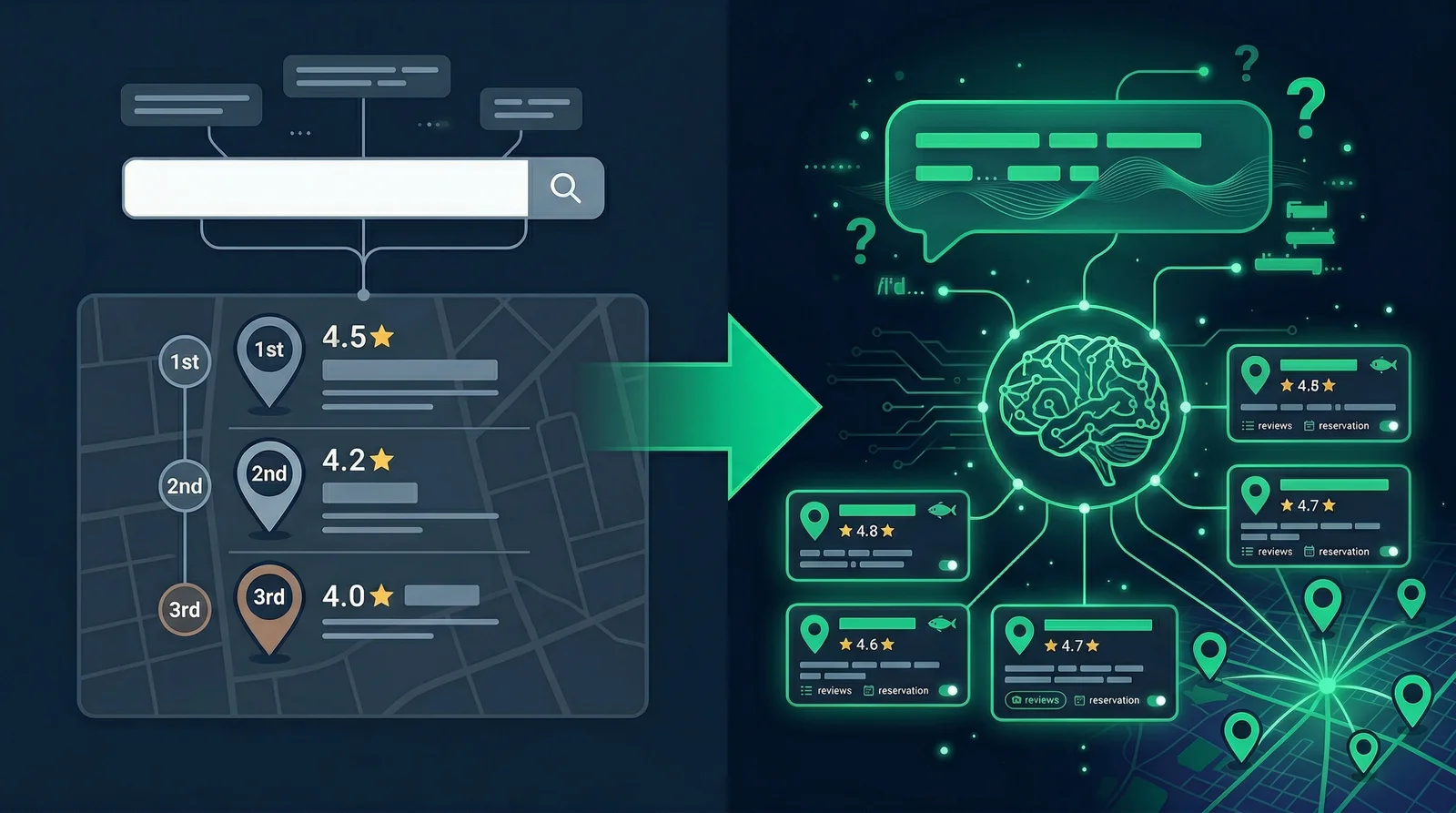
Traditional Google Maps SEO and Ask Maps optimization share the same foundation — but Ask Maps adds a semantic layer that changes how signals are weighted. Here is a direct comparison.
| Signal | Traditional Maps Ranking | Ask Maps (Gemini AI) |
|---|---|---|
| Review volume | Higher count = stronger prominence signal | Still matters, but semantic richness of review text matters more than raw count |
| Star rating | Direct ranking factor; below 4.0 loses visibility | Gemini still filters out low-rated businesses, but 4.5 with generic reviews loses to 4.2 with descriptive reviews |
| Review text keywords | Secondary signal; helps relevance | Primary signal — Gemini quotes specific review phrases as evidence in recommendations |
| GBP attributes | Helps for attribute-specific searches | Critical — each attribute is a matchable data point for conversational queries |
| Multi-platform presence | Supports NAP consistency and citation signals | Amplifies recommendation confidence — more corroborating sources = higher AI confidence |
| Profile completeness | Incomplete profiles rank lower | Incomplete profiles are invisible for the specific queries they could otherwise match |
| Proximity to searcher | Distance is a direct ranking factor | Distance still matters but can be offset by much stronger semantic relevance signals |
The core shift in plain language
Traditional Maps ranking rewarded keyword proximity and profile completeness. Ask Maps rewards semantic richness — the degree to which your reviews, attributes, and profile content contain specific, contextual evidence that matches conversational queries. A business that scores average on traditional signals but has 40 highly descriptive reviews can outperform a business with 200 generic reviews in Ask Maps results. Understanding how Google Maps ranking works is still essential — Ask Maps is built on top of, not instead of, the existing local search foundation.
E-E-A-T Is Now Built Into Ask Maps Recommendations
Google's E-E-A-T framework — Experience, Expertise, Authoritativeness, Trustworthiness — was originally applied to web content quality. Ask Maps extends this to local business recommendations. Businesses with strong owner response activity, verified photos, consistent operating hours, and corroborated profiles across multiple platforms demonstrate trustworthiness signals that feed into Gemini's recommendation confidence.
Research suggests businesses that prioritize E-E-A-T signals see 15–25% lifts in AI-generated answer visibility. For local businesses adopting AI tools, this means responding to every review, maintaining current photos, and building a consistent multi-platform presence — not just optimizing one profile in isolation.
Frequently Asked Questions
What is Google Ask Maps and when did it launch in India?
Ask Maps is a Gemini-powered conversational AI feature built into Google Maps. It replaced the old Q&A tab and allows users to ask natural-language questions — like "best quiet cafe for working near me" — and receive AI-generated business recommendations with narrative summaries. Google launched Ask Maps on March 12, 2026, rolling out simultaneously in India and the United States on Android and iOS. Desktop access was announced as coming soon.
How does Gemini decide which businesses to recommend in Ask Maps?
Gemini evaluates multiple data sources to build its recommendations. The most important is the semantic content of customer reviews — Gemini reads review text for specific service mentions, atmosphere descriptions, dish names, neighborhood context, and use-case evidence. It also reads your complete Google Business Profile, including attributes, services, business description, and Q&A content. It supplements this with data from external platforms like Zomato, JustDial, and Facebook. Businesses whose digital footprint contains rich, specific evidence matching the user's query get recommended.
Do I need to do anything different from regular Google Maps SEO?
The foundation is the same — complete GBP, consistent NAP, strong review signals. Ask Maps adds a semantic layer on top of that foundation. The specific changes you need to make are: (1) ensure your reviews contain descriptive, specific language rather than generic phrases; (2) complete every applicable GBP attribute; (3) seed your Q&A with conversational questions; and (4) build review presence across Indian platforms like Zomato and JustDial, not just Google. If your existing optimization is strong, you are adding a semantic layer, not rebuilding from scratch.
What types of reviews help my business appear in Ask Maps recommendations?
Gemini looks for semantic proof — reviews that describe specific experiences rather than general satisfaction. Reviews containing service or dish names ("the butter chicken was excellent"), atmosphere descriptions ("quiet corner table, good for meetings"), neighborhood mentions ("best in Koregaon Park"), and use-case context ("perfect for a family dinner") give Gemini exactly the evidence it needs to match your business to specific queries. Reviews that say "great place, five stars" contribute nothing to Ask Maps visibility, even though they help your rating.
Does Ask Maps use reviews from Zomato, JustDial, and other Indian platforms?
Evidence from US testing of Google's AI Mode shows it pulling data from 14 or more external platforms when building business recommendations. For Indian businesses, this means Zomato, JustDial, Facebook, MagicPin, Practo (for healthcare), and Sulekha (for services) are likely sources. A business with consistent, strong reviews across multiple platforms gives Gemini more corroborating evidence to justify recommending it. Businesses that rely exclusively on Google reviews are working with a single data source.
How long does it take to see results after optimizing for Ask Maps?
Immediate improvements are possible for GBP attribute completion — Gemini can begin matching your business to more queries as soon as updated attributes are indexed, typically within a few days. Review semantic improvements take longer because they depend on accumulating new reviews with richer content. Most businesses that systematically implement all six optimization steps see measurable changes in Ask Maps visibility within 60–90 days. The first-mover advantage is significant right now because competitor optimization is essentially zero.
Is Ask Maps available everywhere in India?
Ask Maps launched in India as part of its March 12, 2026, global rollout. It is available on Android and iOS in India now, with desktop access coming soon. Availability may be rolling out gradually across devices and regions — if you do not see the Ask Maps interface in your Google Maps app, check that your app is updated to the latest version.
The First-Mover Advantage Is Available Right Now
Ask Maps launched less than a month ago. Your competitors are almost certainly unaware of it. The businesses that begin optimizing their review semantics, GBP attributes, and multi-platform presence in April 2026 will have a compounding advantage as Ask Maps usage grows — the same way businesses that claimed complete GBP profiles in 2015 outranked competitors who set-and-forgot their listings for years afterward.
The optimization work required for Ask Maps is the same work that improves your traditional Maps ranking, your Google Search visibility, and your reputation on every platform your customers use. It is not a new channel to manage — it is the same channel, now with a more sophisticated AI reading the signals you have been generating all along.
The difference between a restaurant that appears in Ask Maps recommendations for "best North Indian dinner near me" and one that does not often comes down to the quality of review text. One has reviews that say "the paneer tikka masala was outstanding and the service was prompt even on a busy Friday night." The other has reviews that say "good food." Gemini picks the first every time.
MapLift generates semantic review templates in 15 seconds
Based on your actual business — your services, categories, location, and customer type — MapLift's AI generates review request templates that naturally prompt customers to write the descriptive, specific reviews that Ask Maps feeds on. Free plan available. Essentials from Rs.299/month.
Sources & References
- Google Maps is getting an AI Ask Maps feature and upgraded immersive navigation- TechCrunch
- Google Maps Launches AI Conversational Search With Ask Maps- Search Engine Journal
- How Google's New Ask Maps Feature Is Redefining Conversational Search- Vendasta
- Google Maps Ask Maps: How Google's Gemini-Powered Conversational Feature Changes Local Search- ALM Corp
- Google Maps gets Ask Maps feature in India- Business Today
- Google Maps "Ask Maps" with Gemini: What It Means for Local SEO- ArcIntermedia
- Guidelines for representing your business on Google- Google
Keep reading
Ready to act on this? What MapLift does — every feature, and which plan carries it.