
Local SEO Citation Building in India: Complete Directory Submission Guide (2026)
Most citation guides list Yelp and Angi — neither of which matter for Indian businesses. This guide covers the 25+ directories that actually influence your Google Maps ranking in India, with a step-by-step submission process and NAP consistency rules you cannot skip.
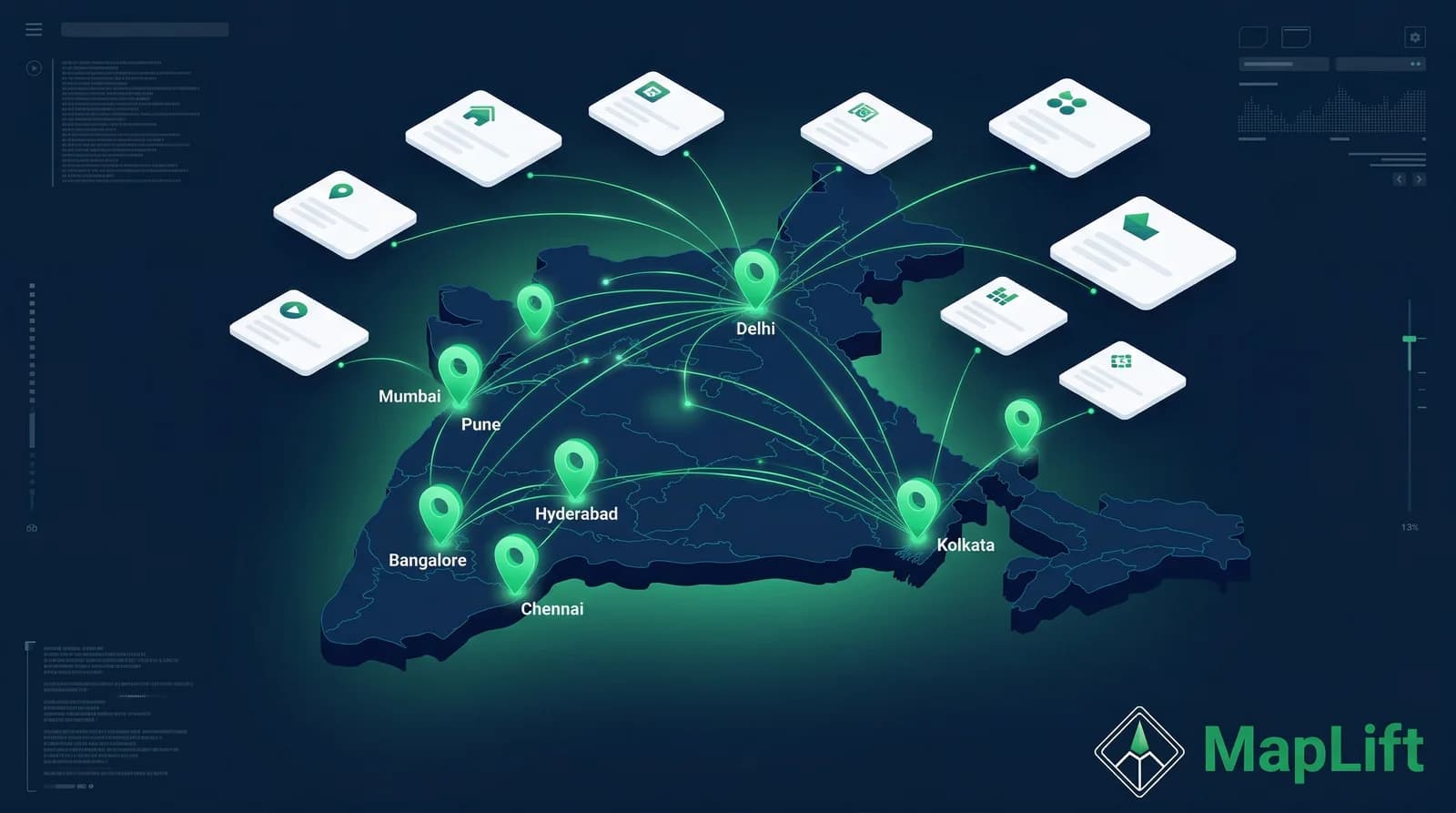
TL;DR — Key Takeaways
Citations are NAP mentions — and they still matter for Google Maps
Citation signals contribute 7–13% of local ranking factors (Whitespark 2026). For Indian businesses in competitive local markets, that margin is the difference between positions 3 and 7 on Google Maps.
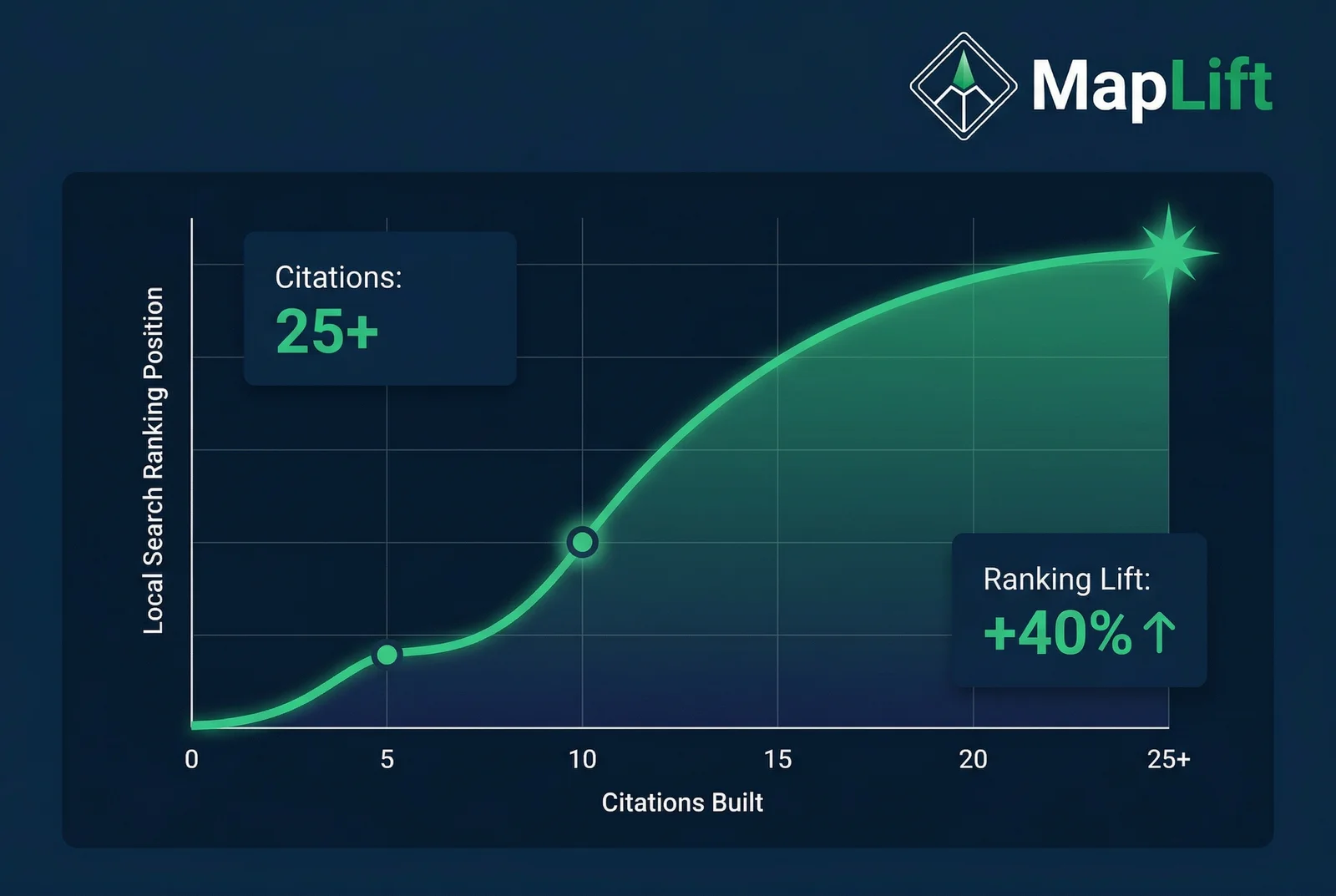
Top-3 Google Maps businesses in India have 18–25 consistent citations
Based on analysis of 200+ Indian businesses — those stuck on page 2 typically have 4 to 7 citations. The gap is closeable in a single afternoon.
NAP consistency is non-negotiable — one field off can suppress rankings
Create a master NAP document before submitting anywhere. Copy-paste, never retype, to ensure byte-for-byte identical business details across all listings.
Industry-specific citations carry disproportionate weight
A Zomato listing for a restaurant, a Practo profile for a clinic, an Urban Company listing for a home service provider — these are more valuable than 20 generic directory listings combined.
Most local SEO citation guides were written in the US or UK. They recommend Yelp, Angi, and Foursquare. None of those drive meaningful traffic or rankings for a restaurant in Bengaluru or a clinic in Hyderabad.
After helping 200+ Indian businesses improve their local SEO in India, I have identified a consistent pattern: businesses ranking in the top 3 positions on Google Maps have 18 to 22 consistent citations across Indian directories. Businesses stuck below position 5 typically have 4 to 7 citations — often just Google Business Profile, maybe JustDial, and a Facebook page they set up years ago.
That gap is not difficult to close. It just requires knowing which directories actually matter for Indian search, how to submit correctly, and why consistency across all of them is more important than the sheer number of listings.
This guide gives you the exact directory list and submission workflow I use with clients — organized by priority tier and business type, with direct submission URLs for every platform.
What Are Citations and Why Do They Matter for Google Maps in India?
A citation is any online mention of your business's Name, Address, and Phone number. It does not need a link to your website to count — a plain text listing on JustDial with your business details is a valid citation.
How Google Uses Citation Signals
Google's local ranking algorithm uses citations as a trust verification signal. When your business appears consistently across multiple credible directories with identical information, Google interprets that as corroboration — multiple independent sources confirming that your business is real, active, and located where you claim.
According to the Whitespark 2026 Local Search Ranking Factors report, citation signals contribute approximately 7–13% of the overall factors influencing local pack rankings. For Indian businesses in competitive local markets, that margin is the difference between position 3 and position 7 on Google Maps.
Citations also matter for Google Business listing optimization because the stronger your citation profile, the more Google trusts the accuracy of your GBP data — which directly influences local pack placement.
Citations and Ask Maps — The 2026 Dimension
Google's Ask Maps feature, which launched March 12, 2026, adds a new reason citations matter for Indian businesses. Ask Maps uses Gemini AI to pull data from multiple external platforms when building its business recommendations.
Testing shows the system reading from 14 or more external sources. A business present only on Google is giving the AI one data source. A business with verified, consistent listings across 15 to 20 Indian directories gives the AI corroborating evidence from multiple independent sources — which increases its recommendation confidence.
Key insight from MapLift analysis
Businesses ranking in the top 3 on Google Maps in India average 18–22 consistent citations. Businesses in positions 6–10 average 4–7 citations. The gap is closeable in one afternoon.
Structured vs. Unstructured Citations: What Is the Difference?
Structured Citations
Formal directory listings where your NAP appears in defined form fields. You fill out a structured form: business name in one field, address in another, phone in another.
Examples: JustDial, Sulekha, IndiaMART, Google Business Profile, Bing Places, Yellow Pages India.
Structured citations are easier to build systematically. You can build 20 to 25 quality citations in a single afternoon if you have your NAP details ready.
Unstructured Citations
Mentions of your business details in editorial content — a food blog naming your restaurant in a "best biryani in Hyderabad" roundup, a news article mentioning your clinic's location, a local events page listing your business as a sponsor.
Examples: Food blog reviews, local newspaper mentions, city guide features, event listings.
According to Search Engine Land, unstructured citations are now the fourth most important factor for AI search visibility — increasingly valuable as Ask Maps becomes a primary discovery channel.
Which type should you build first?
For Indian businesses starting their citation-building process, focus on structured citations first — you can build 20 to 25 quality citations in a single afternoon. Unstructured citations come through press coverage, blog features, and community involvement over time. Both types compound; neither replaces the other.
NAP Consistency — Get This Right Before You Submit Anywhere
Before submitting to a single directory, you need a master NAP document. This is the single source of truth for how your business name, address, and phone number appear everywhere.
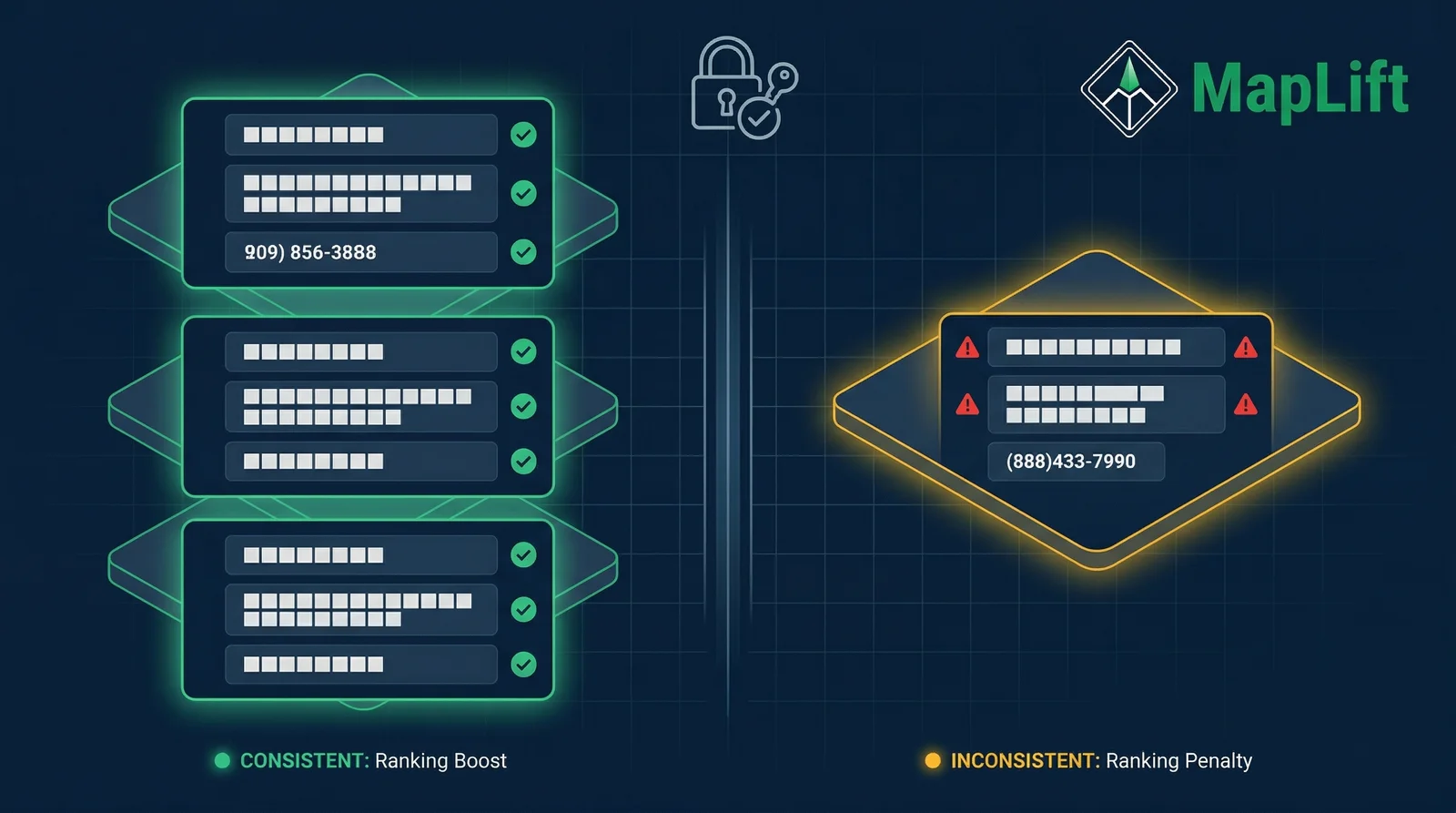
Why Inconsistency Hurts Your Rankings
Consider a dental clinic in Bangalore. If the Google Business Profile says "Sharma Dental Clinic, 45 MG Road, 2nd Floor, Bangalore 560001" but the JustDial listing says "Dr. Sharma Dental, 45 MG Road, Bangalore" and the Sulekha listing says "Sharma Dental, MG Road Bangalore-560001" — Google sees three different businesses.
Inconsistent NAP data reduces Google's confidence in your listing and can actively suppress your Maps ranking. The most common mistake I see in local SEO checklists for India is submitting to 30 directories with slightly different business name spellings — which creates conflicting signals rather than corroborating ones.
Your Master NAP Document — What to Standardize
Business Name
Exactly as it appears on your storefront and Google Business Profile. Do not add keywords. "Sharma Dental Clinic" — not "Sharma Dental Clinic, Best Dentist in Bangalore."
Address
Full address including building number, floor, street name, area/locality, city, PIN code. Decide once whether you abbreviate "Road" as "Rd." or spell it out — then be consistent everywhere.
Phone Number
One primary number. Use the same format every time: either +91-XXXXX-XXXXX or 0XX-XXXXXXXX. Do not mix formats across directories.
Website URL
Always use the same version — https://www.example.com, not http://example.com, not example.com without www. Pick one and stick to it.
Business Hours
Consistent across all listings. If you update hours on Google, update them everywhere within 48 hours. Stale hours create both user confusion and a negative trust signal.
The Copy-Paste Rule
Keep your master NAP in a Google Sheet accessible to everyone on your team. When submitting to any directory, always copy-paste from this sheet — never retype. Retyping introduces inconsistencies. Copy-paste guarantees byte-for-byte identical details across all 25+ directories.
The Top 25+ Indian Citation Sources (Organized by Priority)
Organized into three tiers: non-negotiable platforms every Indian business needs, high-value general directories, and industry-specific platforms where a single listing carries exceptional weight.
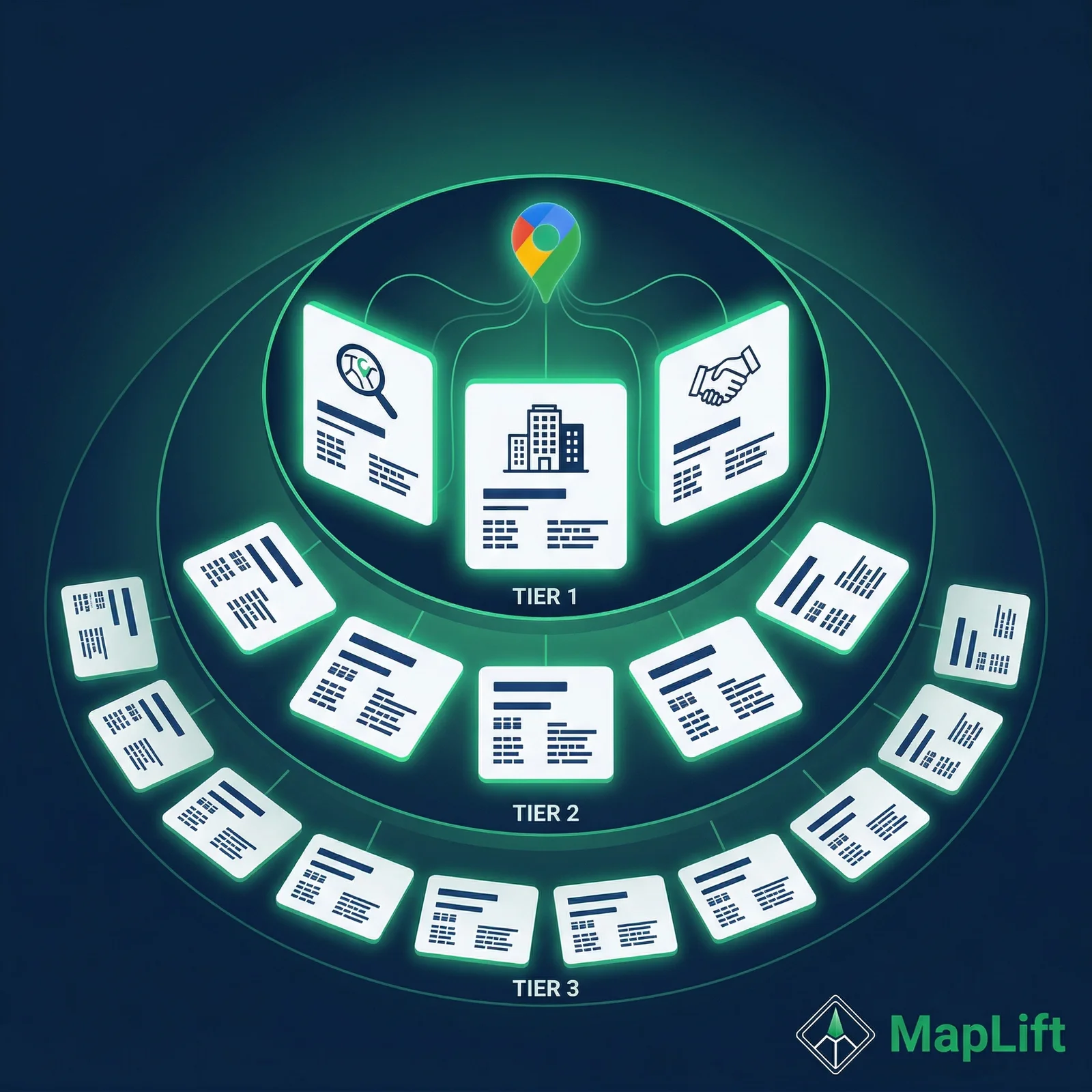
Tier 1: Non-Negotiable — Submit First (Days 1–3)
Highest authority, highest traffic. Every Indian business regardless of industry needs these.
| # | Platform | DA | Best For | Submit At |
|---|---|---|---|---|
| 1 | Google Business Profile | DA 98 | All businesses — mandatory | Submit |
| 2 | JustDial | DA 74 | All local businesses — 100M+ monthly visits | Submit |
| 3 | Sulekha | DA 71 | Service businesses — home services, events, tutors | Submit |
| 4 | IndiaMART | DA 79 | B2B, manufacturers, wholesalers, exporters | Submit |
| 5 | Facebook Business Page | DA 96 | All businesses — review platform + citation | Submit |
| 6 | Bing Places for Business | DA 95 | All businesses — powers AI search products | Submit |
| 7 | Apple Business Connect | DA 100 | All businesses — growing iPhone user base | Submit |
| 8 | Yellow Pages India | DA 52 | General business visibility — free listing | Submit |
| 9 | TradeIndia | DA 63 | B2B businesses, manufacturers, exporters | Submit |
Tier 2: High Value — Submit Within the First Month
Solid authority, quick to submit. These compound your Tier 1 signals.
| # | Platform | DA | Best For | Submit At |
|---|---|---|---|---|
| 10 | Grotal | DA 47 | India-specific local services and retail | Submit |
| 11 | Hotfrog India | DA 53 | General local business — quick free submission | Submit |
| 12 | ExportersIndia | DA 58 | Export businesses, product suppliers | Submit |
| 13 | Asklaila | DA 51 | India-specific local search — retail and services | Submit |
| 14 | LinkedIn Company Page | DA 99 | All businesses — high-authority citation | Submit |
| 15 | Foursquare | DA 92 | Location data distribution — powers 50+ apps | Submit |
| 16 | WedMeGood | DA 58 | Wedding vendors — venues, photographers, caterers | Submit |
Tier 3: Industry-Specific — These Carry Disproportionate Weight
A Zomato listing for a restaurant is worth more than 10 generic directory submissions. Submit to your industry platforms before finishing Tier 2.
Restaurants, Cafes, Bakeries, and Food Businesses
Healthcare — Doctors, Dentists, Clinics, Diagnostic Labs
Home Services — Plumbers, Electricians, Painters, Cleaners, Beauty
Real Estate — Agents, Brokers, Developers
The Citation Submission Process — From Zero to 25 Citations
The complete workflow I use with clients. Initial 20 submissions take 3 to 4 hours. After that, each new directory takes 5 to 15 minutes.
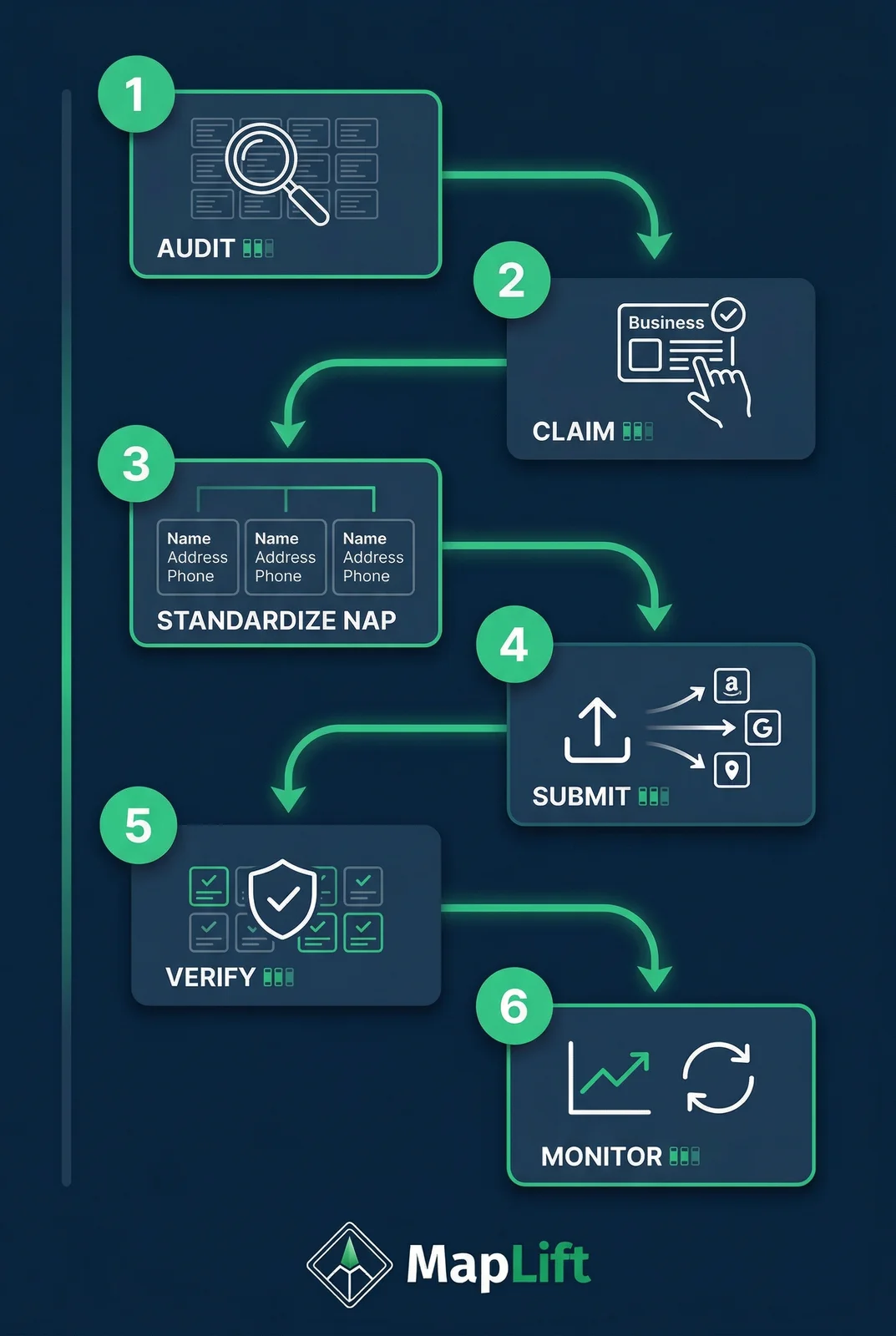
1Create Your Master NAP Document
Time: 30 minutes — do this before anything else
Create Your Master NAP Document
Time: 30 minutes — do this before anything else
Open a Google Sheet and record your exact business name, complete address, primary phone number, website URL, business hours, primary business category, and a 150-word business description. This is what you will copy-paste into every directory — never retyping to avoid errors. Also prepare: a 250-word extended description, your business email, and 3 to 5 photos.
- Business name exactly as on your storefront — no added keywords
- Full address with building number, street, locality, city, and PIN code
- One consistent phone number format across all platforms
- Three to five quality photos: exterior, interior, team or products
2Complete Google Business Profile First
Time: 45–60 minutes if starting from scratch
Complete Google Business Profile First
Time: 45–60 minutes if starting from scratch
Your GBP is the anchor of your entire local SEO foundation. Every other citation you build supports your GBP. Complete all sections: business description (750 characters), every applicable attribute, your services or menu, operating hours including holidays, and upload at least 10 photos. If your GBP is incomplete, fix it before submitting anywhere else.
- Fill out the business description with natural language — describe your services, who you serve, and what makes you different
- Check every attribute that honestly applies — parking, outdoor seating, wifi, women-led, vegetarian options
- Add services or menu items with individual descriptions, not just names
3Submit to Tier 1 Directories (Days 1–3)
Time: 10–15 minutes per submission
Submit to Tier 1 Directories (Days 1–3)
Time: 10–15 minutes per submission
Submit to JustDial, Sulekha, IndiaMART, Facebook, Bing Places, and Apple Business Connect in that order. Copy-paste from your master NAP document for every field — do not retype. Most offer instant publishing; JustDial and IndiaMART may require a verification call within 24 to 48 hours.
- Use the same email address for all submissions — easier to manage verification messages
- Screenshot or record the submission confirmation for each platform
- Note the expected live date for each listing in your tracking spreadsheet
4Submit to Tier 2 Directories (Week 1–2)
Time: 5–10 minutes per submission
Submit to Tier 2 Directories (Week 1–2)
Time: 5–10 minutes per submission
Work through Grotal, Hotfrog India, Asklaila, Yellow Pages India, TradeIndia, LinkedIn, Foursquare, and WedMeGood (if relevant). These submissions are faster. Most are instant-approval or same-day. Focus on accuracy over speed.
- LinkedIn Company Page is often neglected — it is a DA 99 citation that takes 10 minutes to set up
- Foursquare pushes your location data to dozens of downstream apps — worth the 5 minutes
5Submit to Your Industry-Specific Tier 3 Platforms
Time: 30–60 minutes per platform (more detailed profiles)
Submit to Your Industry-Specific Tier 3 Platforms
Time: 30–60 minutes per platform (more detailed profiles)
These submissions take longer because industry-specific platforms have richer profile options. A Zomato restaurant profile includes your menu, photos, cuisine type, and delivery options. A Practo profile includes your specializations, qualifications, and consultation fees. Take the time to complete these profiles fully — a partially completed industry-specific profile is worse than no profile at all.
- Restaurants: Complete your Zomato profile fully, including menu items with descriptions and prices
- Clinics: Add all specializations, qualifications, and consultation information to Practo
- Home services: Complete your Urban Company profile with all service categories and service areas
- Real estate: List your active properties or service areas on MagicBricks and 99acres
6Track and Verify All Submissions
Time: 15 minutes — run 2 weeks after initial submissions
Track and Verify All Submissions
Time: 15 minutes — run 2 weeks after initial submissions
Two weeks after completing your submissions, search for your business on each platform to confirm your listings are live and displaying correct NAP information. Check for any auto-populated listings that may have been created by data aggregators with incorrect information. Correct any discrepancies immediately.
- Add a column to your tracking spreadsheet: "Verified Live" with date confirmed
- Search your business name on Google and note which directory listings appear in results
- Set a quarterly reminder to re-run this verification process
How to Run a Citation Audit for Your Existing Business
If your business has been operating for more than a year, you likely have citations you never knowingly created — created by data aggregators, customer submissions, or old listing scrapers. Some of these may have incorrect information actively hurting your rankings.
Manual Audit Process
Search Google for these queries and note every listing that appears:
"Your Business Name" + city"Your Phone Number""Your Old Address" (if you have moved)"Your Business Name" + category (e.g., "Sharma Dental" + dentist)For each listing found, check whether the NAP matches your master document exactly. Note discrepancies in a spreadsheet column labeled "Action Required."
Fixing Incorrect Citations
Claimable listings on major directories
Log in and correct the information directly. Most major Indian directories (JustDial, Sulekha, IndiaMART) have a claim/manage process.
Unclaimed listings on major directories
Claim the listing first, then correct the NAP information. Do not create a duplicate listing.
Listings on obscure directories you cannot edit
Low priority — their authority is low enough that inconsistencies have minimal impact. Focus your time on the Tier 1 and Tier 2 directories.
Run this audit once per quarter. I schedule it as a reminder on the first Monday of every new quarter. Addressing this is one of the most impactful items on a full local SEO checklist for Indian businesses.
Citations are the foundation. Reviews are what makes the foundation perform.
Citation building gets your business listed in the right places. But consistent citations alone will not push you from position 5 to position 1. The businesses dominating local pack rankings in India combine strong citations with keyword-rich, specific review content — the type that Google's AI reads when deciding which businesses to recommend. MapLift generates AI-powered review request templates personalized to your business, prompting customers to write reviews with the specific service names, neighborhood context, and atmosphere details that drive local search visibility.
Frequently Asked Questions
What are citations in local SEO and why do they matter in India?
Citations are online mentions of your business Name, Address, and Phone number (NAP). Google uses them to verify your business is real and trustworthy. When your business appears consistently across multiple credible directories with identical information, Google interprets that as corroboration — independent sources confirming your business exists where you claim.
For Indian businesses, citations on platforms like JustDial, Sulekha, Zomato, and Practo contribute to Google Maps rankings because they give Google corroborating evidence from multiple independent sources. According to the Whitespark 2026 Local Search Ranking Factors report, citation signals contribute approximately 7–13% of local ranking factors.
How many citations does an Indian local business need to rank on Google Maps?
Based on analysis of 200+ Indian businesses, those ranking in the top 3 positions for their local keywords typically have 18 to 25 consistent citations across relevant directories. You do not need hundreds — you need the right ones (high-authority, India-relevant) with perfectly consistent NAP information.
The 25 directories in this guide — starting with Google Business Profile, JustDial, Sulekha, IndiaMART, and your industry-specific platforms — give you a comprehensive, high-authority citation profile in 3 to 5 hours of initial setup work.
Does a JustDial listing actually help Google Maps rankings?
Yes, though indirectly. JustDial has a Domain Authority of 74, making it a high-authority citation source. A verified, consistent listing on JustDial signals to Google that your business is legitimate and located where you claim.
Additionally, JustDial review data is increasingly used as an external signal by Google's AI systems — including the Ask Maps feature launched March 2026 — for local business recommendations. A JustDial listing benefits you both as a citation and as a review platform.
What happens if my NAP information is inconsistent across Indian directories?
Inconsistent NAP information — different spellings of your business name, abbreviated vs. full address, different phone numbers — confuses Google's entity verification process. Google may interpret inconsistent NAP data as multiple businesses, or as a single business with unreliable information. Either outcome can suppress your Google Maps ranking.
The fix is a master NAP document created before any submissions, and a copy-paste habit that guarantees byte-for-byte identical business details across all 25+ directories. Correcting existing inconsistencies is one of the highest-ROI local SEO activities available to established Indian businesses.
Which citation sources are most important for restaurants in India?
For restaurants, the priority order is: Google Business Profile, Zomato, JustDial, Facebook Business, Swiggy (if you offer delivery), TripAdvisor, and MagicPin. Zomato is particularly important because it has a Domain Authority of 84, over 100 million monthly active users, and its review data is read by Google's AI when generating local recommendations.
A complete Zomato profile — with menu items, photos, cuisine tags, and regular review responses — provides both citation value and direct customer discovery traffic.
How often should I audit my citations?
Run a full citation audit once per quarter. Schedule it as a recurring calendar reminder for the first Monday of each quarter. Search Google for your business name, phone number, and address to find all existing listings. Check that NAP is identical across all major directories. Update hours if they have changed. Search for any new listings created by data aggregators with incorrect information.
For businesses that have moved locations or changed phone numbers, a citation audit is urgent — inconsistent old-address citations can actively suppress rankings for months if not corrected.
Build Your Citation Foundation This Week
The businesses ranking in the top 3 on Google Maps in your city did not get there by accident. They have consistent NAP data across 18 to 22 Indian directories, they appear on the industry-specific platforms their customers actually use, and they run citation audits every quarter to clean up inconsistencies.
This work is not glamorous. But it is the structural foundation that your review management, GBP optimization, and content marketing all rest on. Without it, you are building on unstable ground. With it, every other Google Maps ranking factor you optimize for carries more weight.
Start with the master NAP document. Submit to Tier 1 today. Add your industry-specific platforms this week. You can complete the full 25-citation foundation in under 5 hours — and the ranking benefits compound for months and years afterward.
MapLift: Build the review layer on top of your citation foundation
Citations tell Google where you are. Reviews tell Google what you are and who you serve. MapLift generates AI-powered review templates personalized to your business — prompting customers to write the specific, descriptive reviews that drive local pack rankings and Ask Maps recommendations. Free plan available. Essentials from Rs.299/month.
Sources & References
- Local Search Ranking Factors 2026- Whitespark
- Structured vs. Unstructured Citations for Local SEO- Search Engine Land
- Google's Local Algorithm and Ranking Factors- BrightLocal
- Top 125 Business Listing Sites in India (2026)- Techeasify
- Top 150 Free Business Listing Sites in India 2026- W3Era
- Top 25 Free Citation Sites in India to Boost Your Local SEO- Whitebunnie
- NAP Consistency for Local SEO — Complete Guide 2026- Amigo Studios
- Top Ranking Factors for Local SEO in 2025- Local Falcon
- Local SEO in India: GMB, NAP, and Reviews- NareshIT
- Citation Sites in India for Local SEO- Nebula Infotech
Keep reading
Ready to act on this? What MapLift does — every feature, and which plan carries it.